
SRI RAMANASRAMAM
VOL. 19, NO. 8

As we near the end of the month of July, Ashram renovations continue for the upcoming Mahakumbhabhishekam with painting in the Samadhi Hall, Dining Hall and Old Dispensary. Much work remains but with Bhagavan’s grace, all should be in order when the main event takes place on 20th August.
In this issue we continue the page-turner account of G. V. Subbaramayya in the hall with Bhagavan (see p. 3). In Ramana Reflections, we continue a series on Bhagavan’s teaching as it relates to the dream of the small self (see p. 10). In Ramana Reflections, we begin a series on Bhagavan's teaching as it relates to the dream of the small self (see p. 9).
For videos, photos and other news of events: https://www.gururamana.org or write to us at: saranagati@gururamana.org. For the web version: https://www.sriramana.org/saranagati/August_2025/.
In Sri Bhagavan,
Saranagati
Table of Content
- In Profile: G.V. Subbaramayya (part three)
- Bhagavan's Handwriting: Samidhi Murai, v. 158
- Similes from Bhagavan: The First Person
- Events in Sri Ramanasramam: Veda Pariksha
- Special Feature: Daily Life in the Ashram Gosala
- Events in Sri Ramanasramam: Cow Lakshmi Puja
- Ramana Reflections: The Dream of Self (part two)
- In Focus: July Edition
- Sadhu Natanananda's Upadesa Ratnavali §26
- Invitation to Devotees: Mahakumbhabhishekam, 20th August 2025
- Announcement: Saranagati on the Ashram's WhatsApp Channel
- Best Shot: The Undying Presence
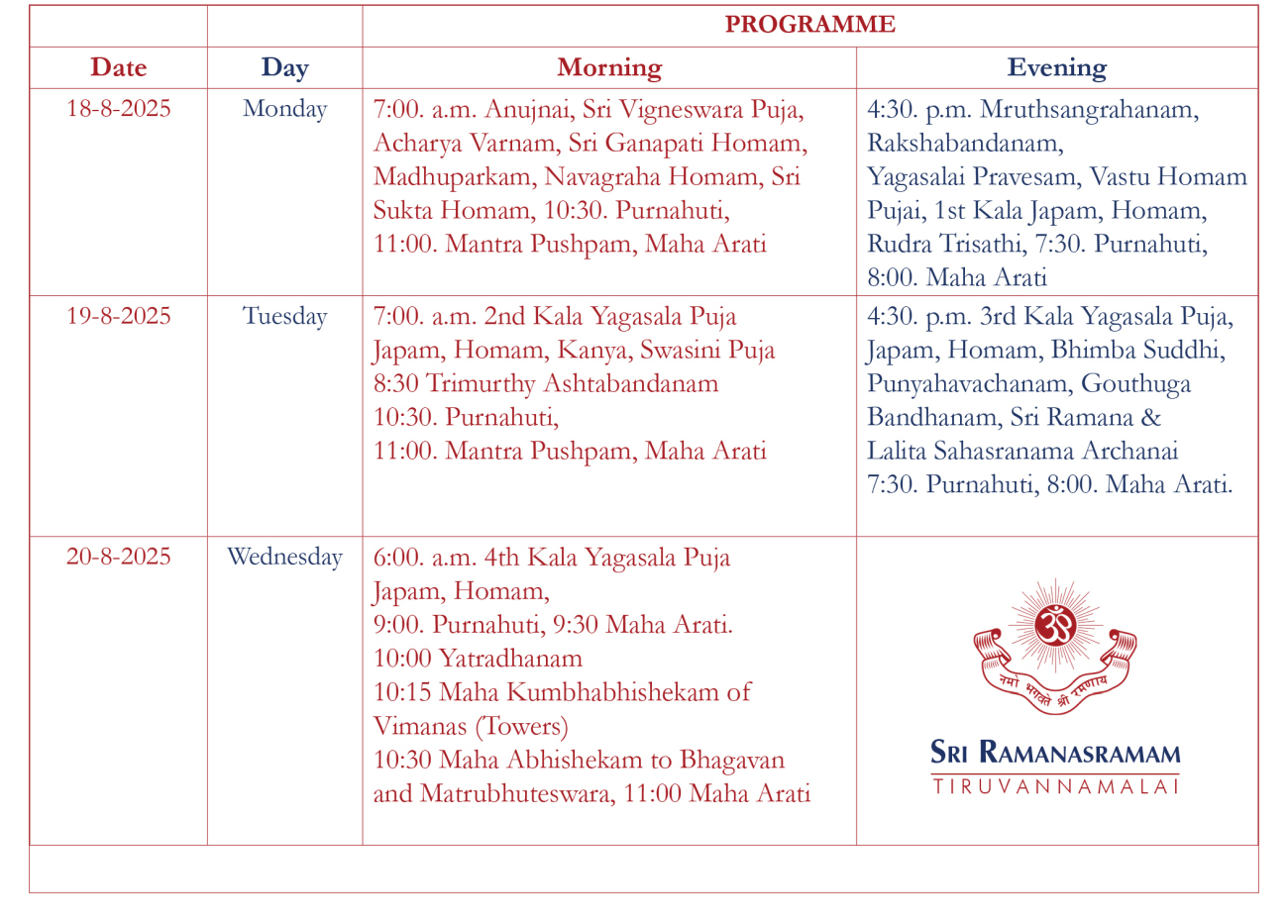
- Events at Sri Ramanasramam: Mahakumbhabhishekam Schedule
Calendar of Ashram Events
6th Aug (Wed) Pradosham |
23rd Aug (Sat) Amavasya |
7th Aug (Thu) Kunjuswami Day |
1st Sep (Mon) Advent Day |
8th Aug (Fri) Full Moon |
5th Sep (Fri) Pradosham |
20th Aug (Wed) Mahakumbhabhishekam |
7th Sep (Sun) Full Moon |
20th Aug (Wed) Pradosham/Punarvasu |
19th Sep (Fri) Pradosham |
22nd Aug (Fri) Muruganar Day |
21st Sep (Sun) Amavasya |
IN PROFILE
G.V. Subbaramayya (part III)
G.V. Subbaramayya (part III)
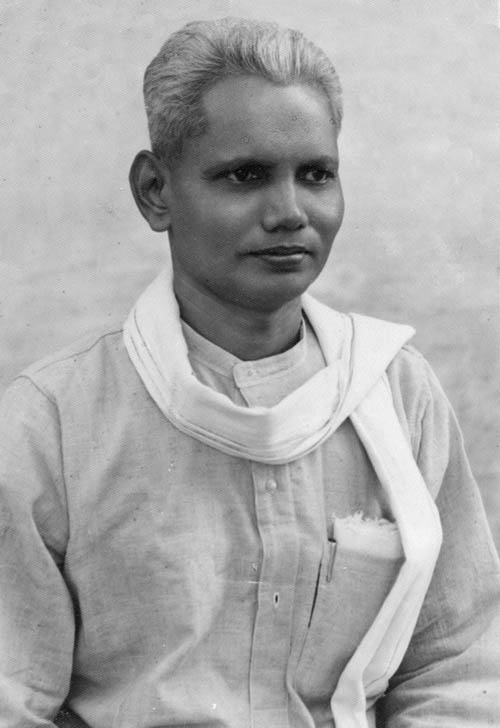
In the previous segment, GVS shared moving accounts of his interactions with Bhagavan— moments marked by grace, insight, and quiet miracles. From the transformative power of a vivid dream to deep teachings on the Self and the nature of the Jnani, the last segment captured Bhagavan's presence through intimate conversations and timeless stories, such as the sunorrender of King Janaka. We witnessed Bhagavan's compassionate responses to devotees, and his penetrating insights on siddhis, prarabdha, and the Guru's grace. Set against the backdrop of everyday Ashram life—including early morning service in the Ashram kitchen—these accounts offer a glimpse into the spiritual richness of life around Bhagavan. We concluded last time with a cryptic prophetic comment of Bhagavan about Russia during World War II, hinting at the silent omniscience of the sage.
Our story picks up with a devotee's struggle to get his daughter married:
On 17th June 1940, Sri R. Narayana Iyer mentioned repeated failures in arranging his daughter's marriage and resolved to await a sign from Bhagavan. Just then, a journal arrived bearing the motto: "You can succeed if you know the power
that is in you." Bhagavan read it aloud. Taking it as grace, Iyer pursued a new proposal— and it succeeded. In a letter, he wrote:
Until Thursday evening, I didn't know the marriage would be fixed for Sunday. No preparations had been made. I wrote a letter of saranagati to Bhagavan, with tears. From that moment, the burden lifted. I went to Tiruvannamalai and found everything— buildings, cooks, vessels, provisions—already arranged. It feels like a dream. I only chant the mantra: 'You will succeed if you know the power that is in you.'
Lament of the Paan
On 5th October, GVS heard that Madhavaswami had forgotten to prepare paan (digesting agent of betel leaf and areca nut taken after a meal) for Bhagavan. Though he apologized, Bhagavan declined and never resumed the habit. GVS
took the opportunity to compose a few Telugu verses entitled Tambula Vilapam ("Lament of the Betel Leaf "), in which paan laments being dismissed for no fault of its own. Bhagavan laughed heartily and explained the
poem to others but stood firm:
I've been waiting for a pretext to give up paan. It's not Madhava's fault—it had to happen. Everything occurs for our good.
Verse Contests
During Christmas 1940, Bhagavan shared memories of verse contests on the Hill. Kunju Krishna Menon composed a verse praising Sri Ramana. Bhagavan instantly composed one in the same metre for Arunachala. Another time, Sri Amritanatha
Yatindra left a Malayalam verse on Bhagavan's seat asking who Bhagavan truly was—Hari, Siva, Guru? Bhagavan wrote on the back:
The Supreme Self who shines as Awareness in all hearts is Ramana of Arunachala. If you enter the Heart with melting love and earnestness, the truth will become plain to you.
Ramana the Bridegroom
One young man, son of Bhagavan's schoolmate Sri Ranga Iyer, read aloud Ramana Kalyanam, portraying Bhagavan as a bridegroom and Jnana as His bride. Bhagavan listened with amused interest and commented. "People like to marry off
a Swami— even if the bride is Jnana!" GVS replied: "Bhagavan is the greatest grihastha—and the Ashram is his eternal marriage pandal (awning for weddings)."
Bhagavan laughed, adding that Sri M.V. Ramaswami Iyer had also written a love-poem, Ramana Sringaaram. Bhagavan then said:
Whatever people carry within, they project onto Swami. Let them be pleased.
Upon his departure, GVS composed a farewell poem:
Like a girl returning to her in-laws after a three-day festival at her parental home, like a boy reluctantly heading back to school after the holidays, like a soldier parting from loved ones for battle, like a beggar waking from a
dream of being king—so I leave the bliss of Ramana Jayanti and return to my place.
Lament of the Kitchen
Later, GVS was stunned to learn that Bhagavan had stopped entering the kitchen. The staff failed to follow his instructions regarding leftover buttermilk, which led to wastage. Despite apologies, Bhagavan never returned to the kitchen.
Saddened, GVS wrote a Telugu poem, Pakasala Vilapam ("Lament of the Kitchen"), in which the kitchen Goddess, a devotee of Bhagavan, mourns His absence and the loss of flavour and joy in every dish.
Bhagavan enjoyed the poem, read it aloud, explained it, and even acted out scenes from it. But, as with Tambula Vilapam, he stood firm. When GVS suggested a little practical response would be better than all the literary
appreciation, he laughed and said:
Things happen as they must. Your job and mine are done—we can enjoy our leisure. These people must learn to manage without me.
GVS commented:
Even those gracious words, I must admit, brought little consolation.
Lalita and Indira
This time, GVS's two daughters—nine-year-old Lalita and five-year-old Indira—stayed at the Ashram for a few days. Lalita was an old favourite of Bhagavan's, and Indira, a new one. As usual, Bhagavan asked them to sing
and dance in the Hall. Indira responded readily, while Lalita, now a little lady, hesitated. Bhagavan said:
What Lalita, I never asked anyone for anything. But now you have made me seek your favour. Look at Indira. She is a good child. Do emulate her.
GVS added:
Both girls then sang and danced as Bhagavan watched, beaming with delight. It became a daily feature of his 'Durbar.'
One day, Indira, perusing the Telugu Upadesa Saram, read aloud: Deham Naham, Koham? Soham ("I am not the body. Who am I? I am He."). Bhagavan exclaimed:
Very good! That is the quintessence of wisdom. Make it your mantra.
Bhagavan asked her to repeat it regularly, and she soon knew it by heart.
Once, when Lalita had gone out, Indira said she was hungry. GVS narrates the following:
Bhagavan immediately took notice and scolded me. What is your meditation worth if you neglect to serve the child? Such was his abounding grace to children. When the two girls went to take leave of Bhagavan, it was morning and Bhagavan was starting his walk up the Hill. He patted Indira most lovingly and said, "So you go to your place, and I will go to mine," pointing to the Hill. Significantly it proved to be their last leave-taking. After reaching home, both the children wrote to me. Lalita wanted me to convey her salutations to Bhagavan and to inform him of her promotion to the next class. Indira wrote that she was constantly repeating the mantra and meditating on Bhagavan. On perusing these letters Bhagavan looked most graciously pleased.
Kanji Amritapanam
One morning not long after this, a devotee brought Malabar kanji (rice gruel), and Bhagavan relished it. He said it tasted better with aviyal (a thick vegetable stew). GVS requested the Sarvadhikari to prepare both
dishes, and on the third day, all was arranged.
On 16th June 1941 there was a festive air in the kitchen. Bhagavan peeked in and gave instructions. Kanji and aviyal were served freely. Bhagavan encouraged all to skip coffee to relish the flavours, even giving up his
own kashayam (bitter medicinal drink). Afterward, he turned to GVS and said:
You were responsible. Now emulate me.
GVS hesitated, saying he was full. Bhagavan smiled:
Don't fear. It will be digested in half an hour.
GVS comments:
We had two more cups together. He radiated grace—it was a sight for the gods.
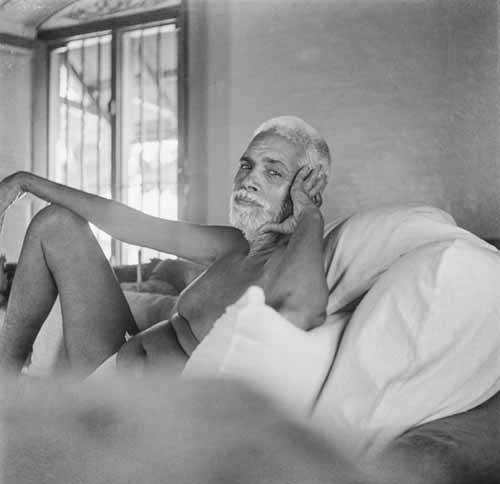
When Bhagavan returned from the Hill, GVS presented two Telugu verses entitled Amritapanam (Nectar-potation):
People hate to drink kanji; but today by Bhagavan's grace, I have drunk kanji with aviyal. What they call Amrita is nothing but this. Formerly you shared cold rice and kanji with cowherd friends. Did it equal this? Later you were feasted with kanji in Vidura's house. Was even that its equal, O Lord?
Bhagavan enjoyed the verses and narrated the story of Sri Krishna at Hastinapura, preferring the humble kanji at Vidura's house over Duryodhana's royal meal. As it was poured, the Lord held out both hands to catch every drop. Bhagavan added that in Malabar, kanji is universal—taken by rich and poor alike. Hence, Malayalis are nicknamed kanji-drinkers.
Young Alagamma
On 31st August 1941, GVS's two-year-old, Alagamma, collapsed with high fever. Her body turned stiff and blue—she appeared dead. As a doctor was sent for, Mrs. Subbaramayya sat and held the child before Bhagavan's photo, calmly chanting,
"Ramana, Ramana, Ramana…" for ten minutes. Miraculously, the child revived. A doctor came and treated her. GVS wired Bhagavan, and the Ashram replied:
With Bhagavan's grace, Alagamma will recover.
A few days later, the Ashram wrote:
His infinite grace is our only protection—what more is there to say?
One morning, Bhagavan read aloud from The Vision:
In the Grammar of God, there is no number but singular, no gender but common, no tense but present, and no person but first.
That Saturday, GVS planned to leave for college. But when he asked permission, Bhagavan said, "Why go now? College reopens Monday." GVS thus cancelled his departure. Bhagavan was unusually gracious that day, even teaching GVS the Malayalam alphabet. GVS narrates:
The next morning, as I prostrated, Bhagavan's gaze became fixed and vast, seeing through and beyond me. I stood still, spellbound. It felt like a divine visitation. Within three months, an event at home would reveal the deeper meaning of that gaze.
Mrs. Subbaramayya's Demise
On 23rd December, GVS's wife suffered a sudden pre- delivery complication and was admitted to the hospital. That night, she delivered a stillborn child. GVS wired the Ashram, praying for Bhagavan's grace, and followed up with a letter.
That evening, he rushed to the hospital on hearing his wife's condition had worsened:
I received the Ashram's letter dated 26th December which ended with, "His Gracious Blessings." But before I reached the hospital, all was over. Her body still warm, I begged the doctor to recheck, but he confirmed that my wife had died. Strangely, at that moment, a deep peace descended upon me. The anxiety vanished. My mind opened to the serene presence of Bhagavan. I felt his grace tangibly, as if guided by his very gaze. Amidst the mourners, I alone was calm, arranging everything and consoling others, functioning like an automaton. It was the miracle of Bhagavan's grace.
The next morning, GVS sat beside his wife's body and wrote a postcard to Bhagavan:
Now I dedicate these motherless children to your feet. Hereafter, they are your children, not mine. I feel utterly helpless and surrender to you. Do with me and these little ones as you please.
The Ashram's condolences of 29th December read:
We are extremely sorry to hear of the great calamity. The card was placed before Bhagavan… May his motherly love help the motherless
children, who are too young even to know their helplessness.
Many condolence letters arrived. GVS adds:
Each felt like Bhagavan himself speaking, offering comfort. One devotee wrote: "This must be part of a divine dispensation. Surely Bhagavan was with you in that hour. Go to him when you can—he is our only solace."
On 25th April 1942, Sri A. Devaraja Mudaliar wrote informing GVS that on 13th April, Bhagavan had fallen on the Ashram steps and fractured his collarbone. That morning, while going up the Hill after breakfast, Bhagavan saw a dog chasing
a squirrel. He tried to intervene with his walking stick, slipped, and fell. Some saw this accident as symbolic of a national event—the sudden retreat of the Japanese fleet from the Madras coast—and believed Bhagavan had taken the blow
vicariously to avert disaster. The news overshadowed the grief of GVS's recent loss. A second letter said:
Last evening Bhagavan referred to your letter... and appreciated that under your present circumstances you could not come here earlier.
GVS continues:
When I finally arrived at the Ashram on 12th June, Bhagavan didn't immediately notice me. He looked frail and unusually silent. Later, I was summoned to him. As I approached, an overpowering feeling arose within me, and I collapsed.
When I revived, Bhagavan made me sit beside him. His gaze overflowed with grace. He said: "The thought that she has gone must go. She abides in the Self as the Self. Without her, where are the children, where is the family?"
From then on, I met him daily, pouring out my grief. On 17th June, I told him with sadness, "She no longer appears in dreams." Bhagavan smiled sadly, "What! Do you find comfort in dream-vision?" I replied honestly, "Yes, Bhagavan." He sighed and remained silent.
That night I dreamed of my wife more vividly than ever before— surrounded by Brahmins who declared, "She is all gold." I awoke sobbing, only to see Bhagavan returning to the Hall. "What! Did you have a dream?" he asked. I nodded and recounted it. He replied:
"You wanted the dream-vision. You got it. But all illusion is sorrow. Only the Real Self is true happiness."
Then as if to divert my mind he enquired "Did you observe anything else?" On hearing this, I recollected that there was a big river flowing nearby, and I told Bhagavan so. Then Bhagavan remarked that the river might be the Ganges and the place Benares. His words somehow had a soothing effect upon my nerves and lifted the load of sorrow from my heart. That morning, I got a letter from my uncle of Benares reminding me of the date for my wife's monthly ceremony and asking me to return home in time. When I showed the letter to Bhagavan, he said "This is wonderful. Your uncle pointed out your wife early this morning in the dream, and again now in this letter." The whole incident was a great mystery, a miracle of Bhagavan's grace and it made me recollect the famous lines of Shakespeare: "There are more things in heaven and earth than are dreamt of in your philosophy."
Soon after, GVS had a vivid dream: he was searching the Ashram for Bhagavan but couldn't find him. Exhausted and in tears, he fell asleep, a dream within a dream. Then, within the dream, he found himself seated face to face with
Bhagavan, and all his distress vanished:
When I awoke, the waking world seemed hazy, as if both dream and waking had merged. In a letter to the Ashram, I questioned whether even my waking life was not part of a continuing dream. The Ashram replied on 24th July: "To those
for whom the sensory world has lost exclusive reality, the distinction between dream and waking becomes only apparent. What is happier than to be a mere spectator of all states of mind? What else is wisdom but to be that?"
During the Dassara vacation of 1942, GVS visited the Ashram again. Navaratri Laksharchana (one thousand recitations of Lalithasahasranamam) was a new feature. The Ashram was expanding, but intimacy with Bhagavan was becoming more difficult due to his declining health and growing crowds. GVS offered two translations of classics for Bhagavan's perusal, Kaivalya Navanitam and Amukta Malyada.
Tragedy Again
But soon after the time of recovery from his wife's untimely demise, misfortune would strike the Subbaramayya family yet again. GVS's 2nd daughter, Indira was stricken with smallpox and passed away on Sri Rama Jayanti, 13th April. The
Ashram wrote:
We are grieved to learn that Indira has left you . . . During the last few months, you and your children suffered much mental anguish, and your home became anything but a home and now the beloved child is gone. How immense must be
the grief of your aged parents seeing your suffering? Who can describe the feeling of ONE who is at once the father and mother of his devotees? May his grace give you peace!
On 15th May the Ashram wrote:
By separate post we have sent a copy of the Andhra Ramana Gita
by Sri Nadu Naganarya Kavi whose manuscript you read and corrected diligently some years ago. Only a hundred copies are printed, mainly due to scarcity of paper. Besides the original slokas and their translation in Telugu, we have
the excellent translation you had given in Telugu. We hope by Bhagavan's grace you can find peace of mind. May his abundant grace flow to you that you may find peace.
On 21st May, Sri M. V. Ramaswami Iyer wrote a moving letter about Indira's death, referring also to the recent loss of Mr. Bose's son:
Let us turn our mind from the world and learn to be dead to its cruelties. Our forefathers found the only true solace in the search for the Self.
On 26th May, acknowledging his small donation made "with a broken heart," the Ashram replied:
The other 'thing'—your grief— Bhagavan must make whole. May He do so.
On 23rd July, the Ashram sent GVS an article by Mme. Hiddinghe for Telugu translation and added:
There's no other alternative than to take life as unreal and develop equanimity. A superhuman task, possible only by Bhagavan's grace.
On 5th August, the Ashram sent a poem titled, The Song of Slavery by Sri Chaganlal Yogi, who had endured multiple imprisonments as a freedom fighter. The poem read:
The ego's struggle is slavery itself. To be Thy slave, O benign Bhagavan, is the only way to freedom.
The letter writer commented:
Life is a tremendous paradox! An independent spirit praying for divine slavery.
That same day, a tomb was erected on Indira's grave bearing the mantra she received from Bhagavan: Deham Naham, Koham? Soham ("I am not the body. Who am I? I am He.")
Lalita's Marriage
In September 1944, during the Dassara vacation, GVS returned to the Ashram and bathed before seeing Bhagavan. Bhagavan gently teased him:
Was the train late? I thought I heard the whistle on time." Ashamed, I learned my lesson: henceforth, I always went to Bhagavan first.
GVS was searching for a bridegroom for Lalita and considered a trip to Kolar. When he asked Bhagavan, Bhagavan simply said:
Don't worry. It will happen when it is to happen.
Sensing his disapproval, GVS dropped the plan. Bhagavan recited a Tiruppugazh stanza known as Kalyanapattu ("Wedding Song"), and gave its meaning. He said it was believed that repeating it would facilitate marriage
plans. GVS began the daily parayana at the end of September 1944. Lalita's marriage took place in February 1945.
On 5th January 1945, Nagamma informed GVS of Echamma's peaceful passing on 27th December. Her daily act of bringing food from town to Bhagavan and the devotees for thirty years was an extraordinary offering of love. On hearing of her death, Bhagavan remarked:
I often told her not to exert herself, but she insisted. Unless she served food to her Bhagavan, she wouldn't eat. Now she's shed her load—but mine remains.
On 27th January, GVS informed the Ashram of Lalita's upcoming marriage and enclosed a note from her to Bhagavan. The Ashram replied two days later:
Lalita's devotion at her tender age is rare. We're glad her wedding is set for 24th February. By Bhagavan's grace, it will go well.
The enclosed letter, dictated by Bhagavan and written by Suri Nagamma, read:
"Bhagavan is pleased to hear of your marriage. He presents Himself to you in this enclosed picture. He will be with you at the function—and always."
That picture became Lalita's daily deity. Following the wedding, both the bridegroom and my mother fell ill, but recovered soon by Bhagavan's grace.
A few days later, speaking on Self-Realisation, Bhagavan remarked:
People expect something miraculous to drop from the sky. But Realisation is simply the removal of the notion that you are the body. You remain as you are. Realisation is just another name for the Self.
Bhagavan often called GVS's daughter Alagamma, "Amma," noting her shared name with his mother. One day she innocently asked why he carried a walking stick. Bhagavan quipped:
It is the third leg that grows in old men. Then, teasing her twin pigtails, he asked why she had 'two horns'—prompting general laughter. She never wore pigtails again.
One morning as Bhagavan sat in front of the shrine amidst a vast crowd with a fence of railings around his seat, he jocularly whispered across the rails to young Alagamma who was squatting nearby:
See Mother, how they have bound your son and put him here in jail!
One morning, Bhagavan smiled and said to GVS:
My illness is a blessing in disguise. Seeing me being massaged, they think, 'Poor Swami! What can he do for us?' and thus, they leave me alone. If I gave out vibhuti or tirtham, I'd be mobbed!
One morning, GVS, Nagamma and the children went up to Skandasramam. The children delighted in playing near the spring discovered by Bhagavan. Upon returning, they shared their joy with Bhagavan, who listened attentively and told stories of the Skandasramam days. When GVS commented that the name 'Skandasramam' also reflected Bhagavan's own divinity as an incarnation of Lord Skanda, he simply replied:
Names and forms may vary, but Reality is the same.
Around this time, GVS received a letter from Lalita, who, with the other children, was now in Madras. She wrote that the children had been so immersed in Ashram life that they now "lived, moved, and had their being" in Bhagavan. His
verses had become their playful code words—for instance, Ajya dharaya ('like a stream of ghee' from Upadesa Saram) and Srotasa Samam ('equal to a stream of water' also from Upadesa Saram). Bhagavan
read the letter and smiled:
Lalita writes well. —
(to be continued)
Bhagavan’s Handwriting: “O God Supreme!” Sannidhi Murai, v. 158

|
allalozhin tenrō vamarvēnam mupporulin ellaivazhak kuttīrnt eliyēn parāparamē. |
When will the boundary dispute among the three(jiva, jagat, and iswara) come to an end,O God supreme, and this poor fellow abide in peace free from suffering? |
Similes from Bhagavan: The First Person
The first and foremost of all the thoughts that arise in the mind is the primal `I’-thought. It is only after the rising of the ‘I’-thought that innumerable other thoughts arise. In other words, only after the first person pronoun, `I’, has arisen, do the second and third person pronouns occur to the mind. They cannot subsist without the former. — Who Am I?§9
Events in Sri Ramanasramam: Veda Pariksha

Ramanasramam has become a major Veda pariksha (examination) centre. On 14th July, eighty Vedic students from across India arrived for three days of examinations in five Vedas and over eight shakhas, including recitations like Mula, Pada, Krama, and Jata. Certificates were handed out by Ashram President Dr. Venkat S. Ramanan and Sivadas Krishnan on 17th July.
Daily Life in the Ashram Gosala
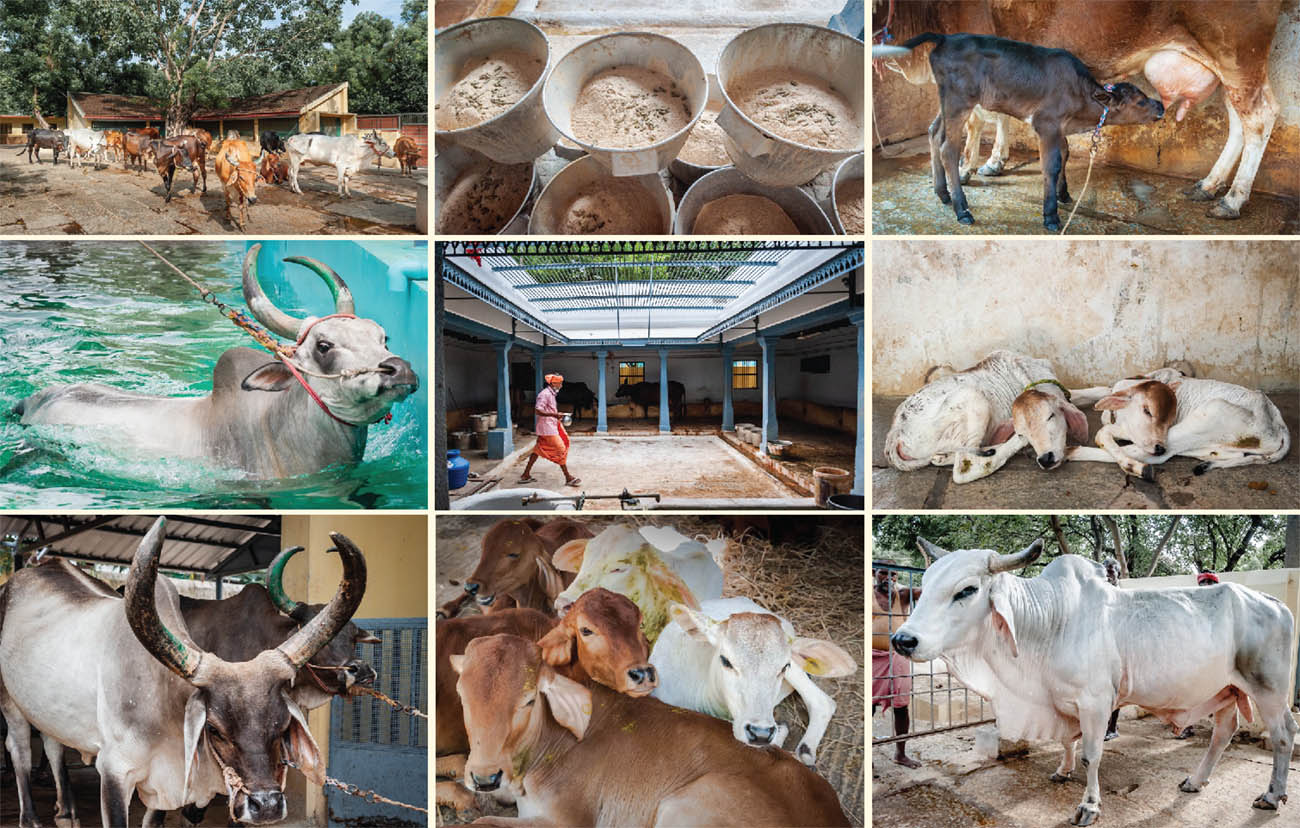
As Ashram dairy needs have grown over the years, the gosala population has expanded to 350 cattle, including Dharparkar, Sindhi, Gir, and hybrid breeds, producing several hundred litres of milk each day. Fed on grass, husk, and greens, the Ashram's cows are well cared for, with veterinary support, vaccinations, and regular bathing. Calves are housed separately and mature in fifteen months. Biogas from cow dung powers the kitchen, with waste water used as fertiliser. Supported by donations, the Ashram gosala runs at a surplus, continuing a legacy begun with Cow Lakshmi in 1926. —
Events in Sri Ramanasramam: Cow Lakshmi Puja

When Cow Lakshmi left the body on 18th June 1948, Bhagavan penned the following lines: "In the year of Sarvadhari, fifth of Ani, a Friday, in the waxing phase, twelfth lunar day, under visakam, Cow Lakshmi attained vimukti." Cow Lakshmi's 77th Aradhana Day was observed on Monday, 7th July at her Samadhi. After the first arati, the ladies sang Manavasi Ramaswami Iyer's Life of Lakshmi. Following final arati, prasad was distributed.
RAMANA REFLECTIONS
The Role of Surrender and Self-Acceptance in Enquiry Practice
RAMANA REFLECTIONS
In the last issue, we saw how Bhagavan frequently employed the dream metaphor to illustrate how a mistaken self-view leads to suffering and how true perception frees us. He emphasized that distress arises not from external conditions but from clinging to false self-images. Bhagavan explained that spiritual progress isn't about acquiring new knowledge but removing ignorance, using the example of the sleeping dream to highlight the illusory nature of the waking dream.
Both the dream 'I' and waking 'I' are transient mental constructs, continuously replaced by new thoughts. The mind, likened to a thief, falsely claims identity with the body, obscuring the underlying substratum of pure, changeless awareness. This illusion is reinforced by biological mechanisms, particularly the brain's salience network, which filters perceptions based on survival needs—functioning like a virtual reality headset 1. The brain's interface2 optimises for successful interactions with the environment rather than accurate representations of Reality. Such processes maintain a false sense of continuity, reinforcing egoic assumptions and limiting access to spiritual breakthroughs. If, as suggested in the first segment, ego can be seen as a side-effect of salience filtering, side-stepping wounds of the Heart is related to the same filtering mechanism.
Awakening involves transcending biological conditioning and embracing broader awareness. Freedom emerges through realizing that both waking and sleeping dream states are projections within the silent, witnessing Self—the true foundation of consciousness.
We saw how the sleeping dream is like the waking dream. The protagonist of the sleeping dream— called the dream avatar—does not doubt its existence and serves as the central character of the dream narrative.
In deep sleep there is no dream subject or avatar.
Bhagavan comments:
In deep sleep you do not say that you are sleeping or that you are going to wake up. But still, you are there. Only when you are awake you say that you have slept.3
Among the three states, deep sleep is closest to the Self. Bhagavan elaborates:
Waking is long and a dream short; other than this there is no difference. Just as waking happenings seem real while awake, so do those in a dream while dreaming. In dream, the mind takes on another body. In both waking and dream
states thoughts, names and forms occur simultaneously.4
Therefore, the waking dream subject never doubts its centrality. Bhagavan concludes:
The jiva remains in the Heart in deep sleep and in the brain in the waking state… In deep sleep the world is not cognised; and so it does not exist for the sleeping man. Therefore, the world is a sequence of the ego. Finding the
ego's source is the final goal.5
In the sleeping dream, no question arises about the dream avatar's reality. Only upon waking is its imaginary nature revealed. At that point, no one can convince us that the dream avatar was real. Bhagavan tells us this applies equally to the waking dream.
Yet, despite knowing that the waking dream is unreal, we persist in indulging the delusion. Knowledge acquired by the waking dream subject is known only by that same illusory identity. This parallels what Bhagavan says about the police chief we lodge our complaint to is himself the thief who robbed our house the night before. The ego is content if the waking dream subject learns more about the ego's illusoriness, so long as the illusion continues. In other words, knowledge about ego's illusoriness doesn't bring freedom on its own if such knowledge is merely added to the dreamer's intellectual repertoire. A spiritually informed dream subject highly versed in the scriptures, for example, may not come a hair's breadth closer to freedom.
This is the grand illusion in the age of Rahu6, where an increased volume of connectivity and information transfer is perceived as the path to freedom, as if data alone can overcome ignorance. Bhagavan recognised the illiterate person who sees through the waking dream as far superior to the erudite trapped in the dream, even if the former cannot articulate his experience. Bhagavan's translation of Vivekachudamani offers the following: Bubbles and waves are nothing but the sea. All that appears in a dream exists in the dreamer. Likewise, all that seems separate from me is in fact myself. This is the vision of resolving the effect into its cause (pravilapa drsti).7
Surrender
How does depth psychology, i.e. dream work and the work of enquiring into the unconscious, fit into Bhagavan's teaching? The answer is surrender. Bhagavan completed his shadow work at the age of sixteen with his death experience.
Afterward, intensive surrender was unnecessary as all the samskaras and shadows were resolved. His ripeness for this experience may well have developed in former births. In the period that followed, Bhagavan's subsequent days
under the iluppai tree, weeks in Patala lingam, and months at Guru Murtham—all in deep samadhi—were an extension of his surrender in the upper room at Madurai. Indeed, samadhi embodies surrender in a most
profound way.
A misunderstanding among 21st-century seekers is equating meditation with attempting to achieve stillness by a force of the will. True meditation involves surrendering to inner conditions and using stillness to calm and purify them.
Ramana devotees are often eager to begin enquiry but want to avoid surrendering to the painful conditions within. Surrender and shadow work are murky, dark, and unsettling—most of us prefer to skip them. The central error of contemporary non-duality, sometimes called 'neo-advaita' is turning Bhagavan's teaching into an intellectual, armchair exercise, where we only read about the path and reflect on what we read, instead of doing the work within. This is sometimes called the spiritual bypass.
Bhagavan may not have spoken of integrating fragmented psychic components, but he emphasized the importance of surrender. A life of non-surrender—a feature of the waking dream—negatively impacts the sadhaka who bypasses the hard work of engaging with inner fragments: discomfort, disappointment, frustration, resentment, remorse, anger, fear and early life wounding.
Lives are wasted imagining that surrender can be sidestepped. We may even convince ourselves we are surrendering when parroting phrases like "It's all Bhagavan's will." No doubt it is all Bhagavan's will, but are we truly willing to give our tender hearts over to it?
Resolution of the Human Eye
High-resolution vision in the human eye occupies only the area of a thumbnail held at arm's length. At any given moment, only a small portion of our visual field is truly in focus. Yet we imagine that our entire field of vision is sharp
and clear. In truth, most of what we see is blurred or incomplete; anything behind us, far away, or hidden within the micro-world of our bodies, hearts, and minds remains unseen. Most of what surrounds and indwells us is cloaked in
darkness.
It has been said that faith is the evidence of things unseen.8 The ego, however, craves clarity. It insists that what lies in plain sight is all there is. But the vision spoken of by the Rishis is not literal sight; it is knowledge of what cannot be seen, what is diffuse, subtle, and hidden—especially in the caverns of the Heart. Egoic vision is clear but imaginary, like a dream—a well-constructed illusion.
What makes the waking dream so alluring is our identification with what we see and the assumption that it represents the whole. This comforting illusion makes us believe everything is within our control, within our conceptual grasp. Thus, we feel no urgency to sift through the rubble of the heart or venture into the shadowy dungeons of the psyche. "We have all we need right here," says the ego—and with that, the waking dream persists.
Bhagavan's Surrender
Bhagavan's surrender is not easy to understand. It involves moving away from the well-lit safety of the ego's literalist clarity into the murky depths of the hidden heart. There, meditation becomes still and grounding. Enquiry serves as
a digging tool that uncovers buried samskaras. Excavation can be triggering, awakening the anxiety of the non-surrendered state. That anxiety then drives us back toward the familiar comfort of egoic illusion. Bhagavan comments:
It is enough that one surrenders oneself. Surrender is to give oneself up to the original cause of one's being. Let us not delude ourselves by imagining the source to be some God outside us. The source is within. We must give
ourselves over to That.9
An Irish philosopher10 once recalled how, in his boyhood, his father would simply sit and listen to the cows chewing their cud. What greater form of contemplation and surrender could there be? If we learned this simple practice, we would need no additional meditation training.
Objective Clarity and Explicit Knowing
The longing for clarity in grasping external objects is a misplaced form of knowing. True clarity arises when we accept what cannot be seen with the physical eyes. Spiritual maturity involves trusting the unseen more than what appears
obvious. If we try to possess Bhagavan's teaching with objective clarity—putting it into a tidy conceptual box, routinising it, making it formulaic, i.e. reducible to a few philosophical, semantic or grammatical principals—we become
unable to live it. The egoic mind wants to feign firm control over that which can only be surrendered to, i.e. lived into.
Fluid Compensation
Fluid compensation is the effort to make up for the sense of inner lack through outward activity. We imagine if we read enough books, memorize enough verses, watch enough videos, or scan the web long enough, we'll eventually be full.
But that day never comes. Instead, the need grows more insatiable.
Chasing clarity through the narrow bandwidth of physical seeing causes us to neglect the inner world. But the inner ramparts of the spiritual heart are not available to the physical eye or even to internal visual consciousness.
Fixation with Light
The waking dream is sustained by our infatuation with light. Most often, the pathway to freedom involves encountering darkness. This is borne out even in nature. Imagine a hornet trapped in a glass bottle with its base facing the sun.
The hornet tirelessly circles the sunlit bottom, convinced that freedom lies in flying toward the light. It never escapes. Eventually, it collapses from exhaustion.11
Now imagine a common housefly in the same bottle. It flits aimlessly—left, right, up, down—bouncing off surfaces. But in its chaotic movement, the housefly inadvertently turns away from the light and discovers the dark end of the bottle where a small opening lies. In a few moments, it escapes into freedom. The housefly, unlike the hornet, is not fixated on light. It surrenders its failed strategies again and again, and in doing so, finds release. The hornet, locked into its linear logic and devotion to light, never surrenders—and perishes in the effort.
Stepping into the Invisible
Bhagavan's surrender involves the willingness to give up the light to find the light. It resembles a 20th-century myth of the hero who must cross a chasm. An oracle has foretold that the hero must step into the void, placing
his full weight over empty space, trusting that an invisible bridge will appear only once he has taken the decisive step. Unless he takes the step, the bridge will remain unseen. But the moment he entrusts himself to the unseen bridge,
it reveals itself, enabling him to cross.12 This is surrender. As a saying goes,
we cannot cross a chasm in two small jumps.13
But neither can we cross it by refusing to jump at all.
There may come times when our faith fails us as we later face chasms—times when we cannot go back yet cannot move forward. In such moments, we must be honest about inner and outer conditions and accept that our faith is sometimes insufficient for the task at hand. The dream is pierced—what is unseen is real; what is apparent to the senses is not to be trusted. A true encounter with the dream world demands deep searching. We must know, despite what our senses report, that the invisible bridge exists. The leap of faith is mysterious— non-linear, non-literal, non-objectifiable, even irrational and paradoxical. The only map for this terrain is surrender.
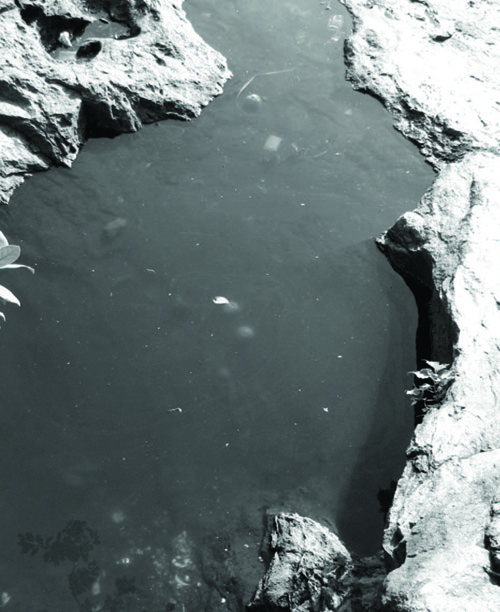
Each moment of surrender helps us integrate new challenges unearthed by enquiry. Every level of uncovering awakens what lies buried—including latent demons that arise and attempt to dissuade us. In such moments, we may lose heart or feel we lack the courage to proceed. We are then invited to work with what enquiry has stirred up, to integrate it, and to make peace with freshly awakened fears. We alternate between breaking into deeper layers of samskaric sediment and embracing all that is frozen there, including the original fear that caused the stratification to begin with. As we sit with the uncertainty awakened by the latest excavation, we make every effort to return enquiry. The basic difference between an ordinary person and a spiritual warrior, it has been said, is that the former takes everything as a blessing or a curse while the latter takes everything as a challenge to be met. 14
Enquiry and Surrender
Enquiry and surrender involve darkness. Like the housefly, we must turn from the light and trust that we'll find our way even if we cannot visualise it. The dream of the small self is born of clinging to what can be seen and known
through the egoic mind—explicit knowledge, Aristotelian logic, and rationality—at the expense of all that cannot be seen or known.
A heart fixated on a hyper-literalised view of the world—entranced by the hope that some newfound purity will free it of its burdens—can only be liberated through descent: embracing the burden within rather than wishing it away. Blake
versified this theme saying, If the doors of perception were cleansed, everything would appear as it is—infinite.15 Here the poet is speaking of the
inner doors. Our mistake is confusing external physical light with inner illumination.
We try to escape the waking dream by clarifying its contents. But the urge for explicitness is rooted in insecurity—our need to grasp what we know and to be assured of its validity. These are the marks of a flat literalistic ego. We believe that by rooting out all that is vague and shadowy, we come closer to the Self. But the craving for certainty is as corrupting as any other selfish desire. "Who are we to pray for our own realisation?" says Bhagavan. Might we instead be willing to stand knee-deep—or even neck-deep—in our defilements, and release every notion that we can kill them off or pretend them away?
If we pretend them away, the waking dream tightens its grip, and the ego wins long-term job security. Where our defilements are, there our heart is—encased in them. Defilements cling to the heart and to nothing else. Our defilements are negative reflections of our resistances. We heal them not by fighting them, but by holding them neutrally.
Inflation
Stated in short, the brightness of egoic clarity appears as wakefulness. In reality, it is only dream-slumber born of delusion. If ego becomes swollen in its dream-like denial of the Self, it ever seeks its reflection in the measurable,
i.e. what can be possessed and controlled—resulting in a flat quantitative view of the life-world.
In its quest for independence, the ego cuts itself off from the unconscious. If our hearts were once animated by divinity, they are now barren—a mirror of ego's own inner void. The ego's longing for transformation, vouchsafed by
attrition through surrender, is thwarted by relentless clinging to illusions of power. Imagining itself as a hero, the ego becomes inflated and tyrannical, losing all contact with the Self. The grace of the Self, when refused, reappears
not as light but as fragmentation. In rejecting what we fear, the ego seals its fate, pursued by the shadow it seeks to
avoid which includes all that is hidden in the Heart.16
The Shadow
Bhagavan seldom spoke of karmic afflictions. Yet he stressed the importance of surrender—allowing things to be as they are without force or resistance.
Often, we want the Ramana path to serve as a shortcut, helping us bypass the messy regions of the heart. Failing that, we settle for spiritual pantomime—mechanical sadhana that avoids the tender places within.
Enquiryisnotmechanical, intellectual, orphilosophical. It is a direct encounter with what is hidden within—a sober look at what remains unintegrated. Depth psychology teaches that what we repress returns in fresh guises. The waking dream is built on repressing the unpleasant. If we imagine ourselves one step ahead of where we are, we may also imagine that what is unpleasant can be resolved by throwing it away. But it only festers in the sealed-off heart, menacing us in unexpected ways.
The Road to Humility
We choose the waking dream because reality is uncomfortable. By facing conditions honestly, we strive to be free of the dream, even if we have always clung to it like a child to its mother's apron strings.
If the modern malaise is estrangement from the Heart, as Jung said,17 it is because the Heart is divided—one part reaching upward toward the light, the other retreating into the shadows. Neither on its own is liberating. One seeks to escape the earthly by denying defilements and karmic burdens; the other recoils from the light, retreating into a cocoon. If either pole is denied, the waking dream persists.
Ramana in Hell
In 1896, Seshadri Swami urged his devotee Venkatachalam to enter the dark depths of Patala Lingam where the young Brahmana Swami sat in meditation. Coming from the glare outside and moving down into the darkness below, Venkatachalam
initially couldn't see anything. After a few minutes, however, he could make out a young face behind the lingam. But the sight gave him chills and he beat a hasty retreat.
18
In the Western tradition, Jesus descends into hell, where he remains for three days before ascending to heaven. Patala—hell—is the realm of nagas and demons. When saints appear there, it signifies the dissolution of
dualities—good and evil, matter and spirit, heaven and earth. The same applies to Siva doing tapas in the charnel grounds—the place of death, fear, and the unknown where transformation takes place. Bhagavan comments:
Samsara is full of likes and dislikes and the other opposites. Like a dream, it seems real but, on waking, it vanishes. Because the dream is negated on waking, we know it to be unreal, but the world persists, and we imagine it to be
real. So long as the substratum— the non-dual Brahman—is not seen, the world seems real, like illusory silver in a piece of mother of pearl. 19
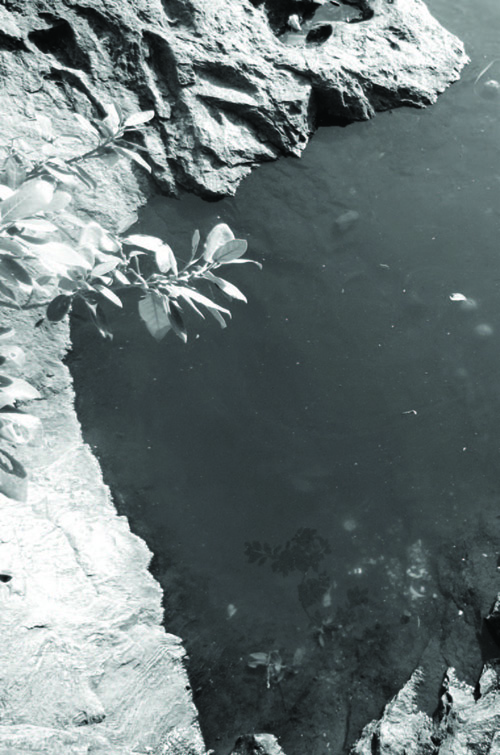
The Dream of Opposites
The dream of opposites appears real only while we remain immersed in it. Its persistence does not confirm its truth. The illusion arises from ignorance of Brahman, the ever-present non-dual substratum. When Brahman is realized, Bhagavan
tells us, the world is seen as a projection upon the Self—lacking independent reality. Bhagavan recalls the Upanishad:
Just as the spider spins its web out of itself and then withdraws it, so too does Brahman project and dissolve the universe.20
Hell reflects a psyche at odds with Spirit—a rational ego estranged from the Self—but it only threatens those who deny what is unwanted. If subterranean spirits, nagas, and demons represent unconscious fears and desires, they lose their power to disturb us when integrated.
In a puppet show, the villain is a cruel-faced puppet with a harsh voice. Children are frightened. But the puppeteer is not frightened. Behind the curtain, he pulls the strings and inflects his voice to animate the villain. To the enlightened mind, hell is like this—a scene in a puppet show. The liberated one is a witness to the waking dream but no longer fears its appearances. Therefore, Jesus prays for his persecutors, and Bhagavan jokes through surgeries without general anaesthesia and faces impending physical demise with serenity.
Light and dark, pleasure and pain, self and other— these sustain the illusion of the waking dream. Their resolution is symbolized in Arunachala as Ardhanarishvara (Siva-Parvati)—the half-male, half-female united as God.
The solution for the polarities is opting for the pole we reject, like homeopathy treating illness by aggravating its symptoms, or curing snakebite with snake venom. The marriage of opposites is a symbol of all our longed-for "reunions
up and down the scale of being":
Emotion and intellect, matter and spirit, body and soul, the one and the many, male and female, human and divine, freedom and necessity— all the contradictions of our fractured existence are most marvellously woven together in the
wedding of soul and spirit, which preserves our [apparent] two-foldedness right into the heart of the One.21
Surrender is under the sway of ego's calculus by being weighed against what we believe we are entitled to. When things don't go our way, we want Bhagavan to rescue us. But grace often shows up as loss—the Divine's way of redirecting the
heart. Painful as it is, loss becomes the ground for a deeper vision. In the crucible of adversity—when stripped of control—our hearts are transformed, and our prayers grow urgent like those of Gajendra, the Elephant King, who finds
himself in the jaws of a mighty crocodile.22 Only at such moments does real transformation take place. Bhagavan comments:
If you have surrendered, you must be able to abide by the will of God and not make a grievance of what may not please you. Things may turn out differently from what they appear. Distress often leads to faith in God.
23
In these uncertain times, concern for the future can be used as an antidote to our head-in-the-sand apathy. In the era of an AI arms race, the dream intensifies, and the conventional challenges of daily life are compounded by unprecedented global developments which indeed make us feel like we are caught in the jaws of a crocodile. Our task is to hand everything over to Bhagavan. After all, surrender is the means for resolving the opposites—the portal leading us out of our glass-bottle prison.
The Gita tells us, He who sees darkness in light and light in darkness is truly wise. Further, it says, the illumined one sees the pairs of opposites equally. In non-dual awareness, the polarities are not actually
opposed but arise from the same source. Awakening doesn't mean choosing one over the other but holding both in awareness until the gap narrows. Release from the waking dream comes from relinquishing what we cling to and accepting what
we oppose. It is not about seeking pure light or perfect ease but giving ourselves over to the conditions of our lives as they present themselves to us each moment, trusting that all will be as it should be if we remain
steadfast and stay true to the path laid out by Bhagavan. —
(to be continued)
In Focus: July Edition
For the July edition of In Focus, copy the following URL into your browser July Infocus
Sadhu Natanananda’s Upadesa Ratnavali §26
Jnanis indifferent to the world will never get bound by it.
Only the pot, which holds water, will sink in it, while the log, which does not absorb water, will not sink. Likewise, those who are inwardly attached to the world will be deluded by it, while those who are not attached to the world will not be deluded by it, even though engaged in worldly activities. — GVK §99
A piece of wood will not drown in water but a pot that holds water within it will. In the same way, those who believe the world to be true and engage in it are bound by it and not the Jnanis oblivious to it even though living in the world.
Mahakumbhabhishekam Renovations: Update

In preparation for the upcoming Mahakumbhabhishekam, Ashram staff and workers have undertaken extensive renovation work. Bhagavan’s Samadhi Hall and the Old Hall are being repainted, as well as the Ashram’s Dining Hall. Principal buildings are scheduled for fresh coats of paint, with roofing work underway. Sri Ramanasramam’s Mahakumbhabhishekam will take place on 20th August 2025.
Invitation to Devotees: Mahakumbhabhishekam 20th August 2025
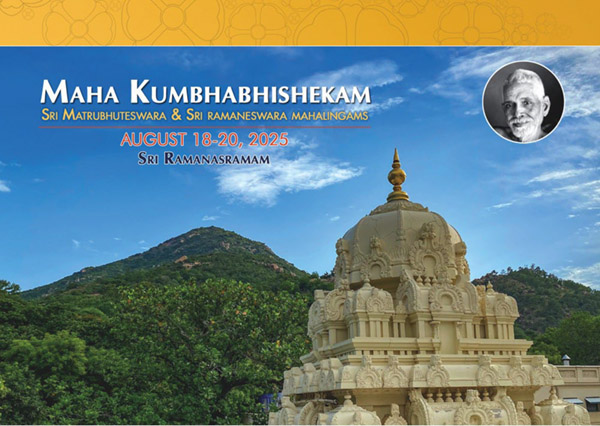
Sri Ramana Ashram joyfully invites all devotees to a three-day celebration marking the completion of major renovations at the shrines of Matrubhuteswara and Sri Ramaneswara Mahalingams. On the 20th of August 2025, the yagasala's rites and sacred recitations will culminate in the Mahakumbhabhishekam—renewing the Ashram shrines with spiritual power.
The restorations—faithfully carried out according to agamic guidelines— include repairs to weathered gopurams and vimanams, re-sealing of roofs, and re-laying the sanctum platform of Sri Ramaneswara Samadhi Shrine. More than structural upkeep, such works are acts of consecration, preserving both sanctity and beauty. This tradition began in 1949 under the guidance of Vaidyanatha Sthapati and continues under the direction of his grandson, Selvanatha Sthapati. All are warmly invited to participate in this momentous event in the presence of Sri Bhagavan and Holy Arunachala. —
Announcement: Saranagati on the Ashram’s WhatsApp Channel
Now users can subscribe to Saranagati e-newsletter in pdf or web version formats at: https://whatsapp.com/channel/0029VaByrGSC1FuLjCG2fW2P as well as receive Ashram updates. For those wanting to register for Saranagati by email, go to: https://www.gururamana.org/Resources/saranagati-enewsletter
Best Shot: The Dream of the Water Lily

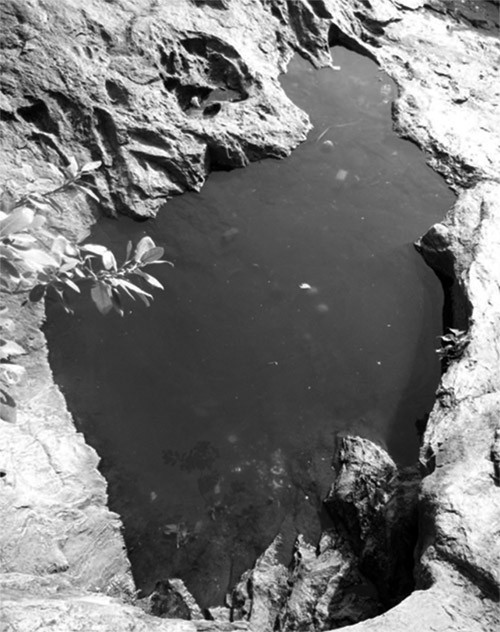
Arunachala is a lingam—a sign or symbol of the divine—and by tradition, the very form of Siva. As an icon of the undying presence underlying all reality—the original light of consciousness that illumines all that is seen and known—Arunachala stands as the paradigmatic symbol of the Self, the fire of wisdom that burns away the veils of illusion and ignorance. —
[Editor's note: This photo is neither AI-generated nor Photoshop enhanced. It was taken with a mid-range Samsung phone, with only slight brightness adjustments]
Best Shot: The Dream of the Water Lily
Endnotes
- 1 'Headset', from the cognitive scientist-mathematician Donald Hoffman.
- 2 This is like the operating system on our laptop which gives a desktop view, rather than just 0's and 1's. Of course 0's and 1's are also an 'interface' for what more fundamentally are pulses of electricity.
- 3 Talks, §46, 12th April 1935.
- 4 Who Am I? §22.
- 5 Talks, §29, 4th February 1935; Talks, §53, 15th June 1935.
- 6 Jyotishis tell us that Rahu (one of the navagrahas or nine planets) governs pathways of information transfer, such as nerve fibre in the body, or telegraph wires, internet connections and ultimately neural networks and AI.
- 7 Vivekachudamani, in the Collected Works, p. 259.
- 8 Hebrews 11.1.
- 9 Talks, §208, 18th June 1936.
- 10 John Moriarty from an interview by RTE.
- 11 From a talk by Roshi Bodhin Kjoelhede at Rochester Zen Center.
- 12 A rare moment when Hollywood taps into archetypal wisdom is the following scene from Indiana Jones and the Last Crusade: https://youtu.be/sBBbq2g7yf8
- 13 Shunya Kjoelhede in a public talk.
- 14 From Carlos Castaneda's The Teachings of Don Juan.
- 15 From William Blake's The Marriage of Heaven and Hell.
- 16 Adapted from Patrick Harpur's The Philosopher's Secret Fire.
- 17 The Secret Tradition of the Soul, Patrick Harpur, p. 206.
- 18 Saranagati, March 2025, p. 5, from Seshadri Swami of Tiruvannamalai, S.A. Subramanian, 1998.
- 19 Atma Bodha §6 and §7, Collected Works, p. 199.
- 20 Who Am I? §8; Mundaka Upanishad 1.1.7
- 21 The Secret Tradition of the Soul, Patrick Harpur, p. 218-19.
- 22 Srimad Bhagavatam, 10.88.8 says that when the Lord favours someone, He will gradually take away their blessings, causing even loved ones to turn away. Though painful, this drives the devotee to seek refuge in God alone, deepening inner growth. Gajendra's story illustrates this: caught by a crocodile and helpless, he realizes no one can save him. In total surrender, he calls upon the Supreme as the only refuge from the serpent of time. His despair-born surrender becomes the gateway to freedom—grace revealed through loss.
Publisher: Dr Venkat S. Ramanan
saranagati@gururamana.org
